About this recipe
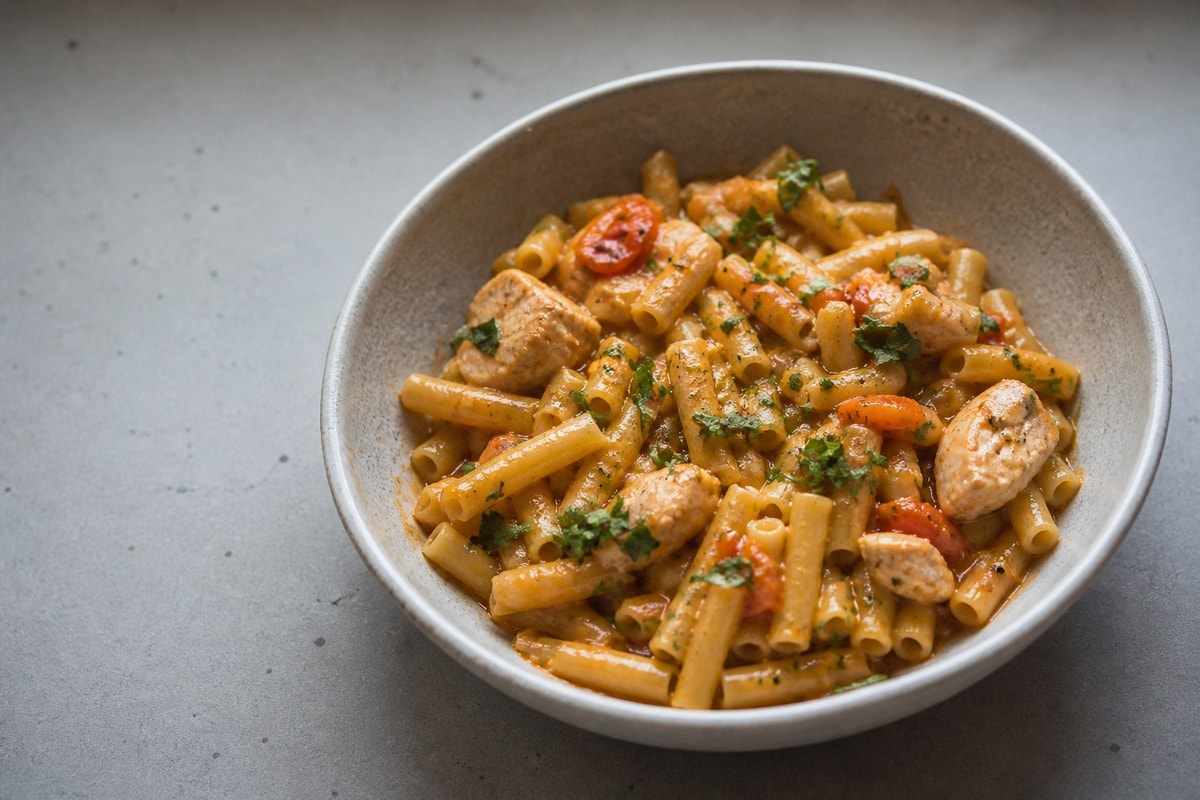
One pot means the pasta cooks in the same skillet as the chicken and tomatoes. The starch thickens the sauce so you do not need cream.
Stir often so nothing sticks. Keep a little extra broth nearby if the pan looks dry before the pasta is tender.
Leftovers pack well for lunch. Add a splash of water when reheating so the noodles loosen.
SEAR
Step 1
Pat chicken dry. Season with salt, pepper, and half the Italian seasoning.
Step 2
Heat olive oil in a large deep skillet or Dutch oven over medium-high. Cook chicken until browned and mostly cooked through, 5 to 6 minutes. Transfer to a plate.
BUILD THE POT
Step 3
Add onion to the pan. Cook over medium until softened, about 3 minutes. Stir in garlic and remaining Italian seasoning for 30 seconds.
Step 4
Add crushed tomatoes, broth, and dry pasta. Stir to nestle the pasta under the liquid. Bring to a gentle simmer over medium heat.
Step 5
Simmer uncovered, stirring often, until pasta is al dente and sauce thickens, 10 to 12 minutes. Add a splash of water if the pan looks dry before pasta is tender.
FINISH
Step 6
Return chicken and any juices. Cook over medium until chicken is 165°F, 2 to 3 minutes. Fold in spinach if using until wilted. Taste for salt and serve.
Tips
Use a wide, deep skillet so the pasta cooks evenly in one layer.
Short shapes like penne or rotini hold up better than long noodles in one-pot cooking.
Swaps
Chicken breastGround turkey
Brown and crumble first, then continue with onion.
Crushed tomatoesPassata or tomato puree
Same volume. Slightly smoother sauce.
Equipment
large deep skillet or Dutch oven · instant-read thermometer
Explore this recipe
Browse related Explore collections that match this plate.